
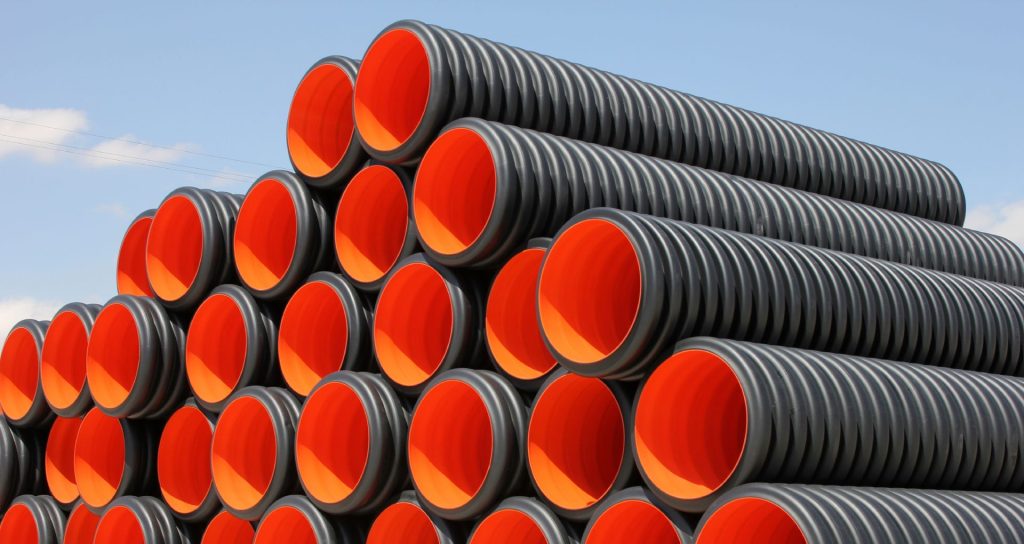
The pipe and fittings industry is undergoing continuous progress and development in response to population growth and the increasing industrialization of societies. Materials that contribute to greater sustainability, improved performance, and extended durability play a crucial role in infrastructure, industrial, residential, and agricultural applications.
In this context, plastic pipes and fittings have largely supplanted their metal and concrete counterparts due to their advantageous properties, such as resistance to corrosion, wear, and chemicals, as well as flexibility, lightweight, impermeability, low production cost, and long service life. These characteristics make plastic pipes and fittings indispensable in water supply systems, fuel and chemical transportation, irrigation networks, and piping infrastructure.
Polymeric materials are utilized both as primary materials in the production of pipes and fittings and as insulation or protective coatings, particularly for preventing the corrosion of steel pipes. Among the polymer products employed in this industry are:
– Various grades of polyethylene (PE)
– Various grades of polypropylene (PP)
– Various types of polyvinyl chloride (PVC)
– Cross-linked polyolefins modified with peroxides or silanes
– Polyethylene coatings with maleic anhydride, are utilized in multilayer pipe production due to their strong adhesion to polyethylene and epoxy.