
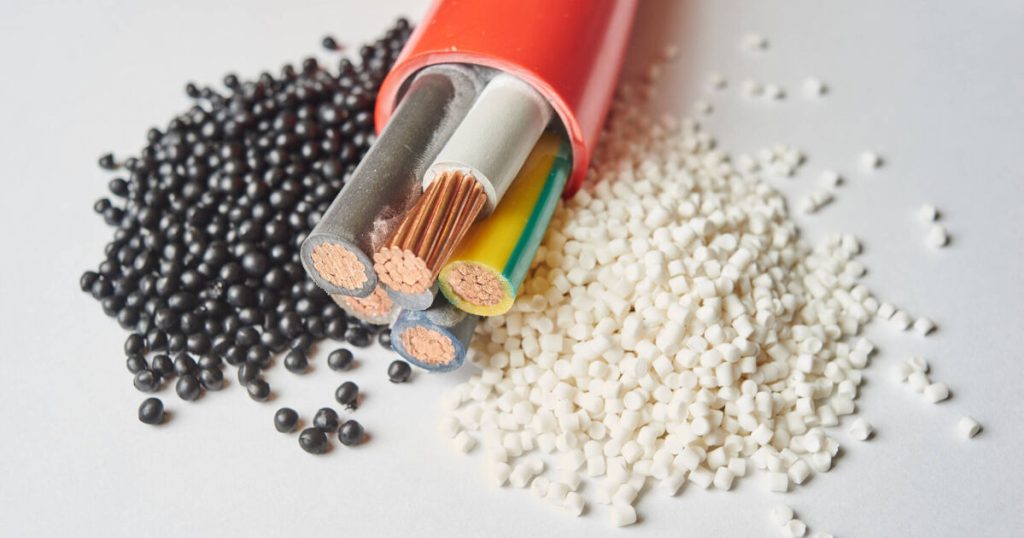
The growing adoption of electric motors in diverse industries and the global expansion of telecommunications has increased the demand for engineering polymers in cable and wire coatings. Polymer compounds with appropriate mechanical strength, durability, and environmental resistance are integral to this industry. Currently, polyvinyl chloride (PVC) is widely used as a coating for copper wires, making it the top thermoplastic polymer in this application. Cables made from this polymer are cost-effective and have a long lifespan. The use of various additives, such as fire retardants, plasticizers, stabilizers, lubricants, and other mineral fillers, has enabled the production of a wide range of products. These include fire-resistant electrical cables, UV-resistant cables, and cables resistant to various chemical environments.
One of the main issues with PVC-coated wires is that they emit toxic gases during fires, which can pose serious risks to human life. Additionally, due to the high amount of smoke they generate, fire containment becomes more challenging. Therefore, halogen-free compounds have been developed for this purpose. These compounds are used in environments with a high risk of fire. Materials such as thermoplastic elastomers (TPE), polyurethane elastomers (PUR), silicone rubbers, and EPDM rubber are among the substances that can be used in halogen-free coatings.